
ORGANIC FARMING AND CONSERVATION
OF THE TRADITIONAL AGRICULTURAL ECOSYSTEM IN LA LIMIA
Traditional agriculture has provided food and other essential goods continuously for centuries; thanks to the wisdom accumulated generation after generation, farmers were able to create a cyclical and self-sufficient system in perfect harmony with nature.
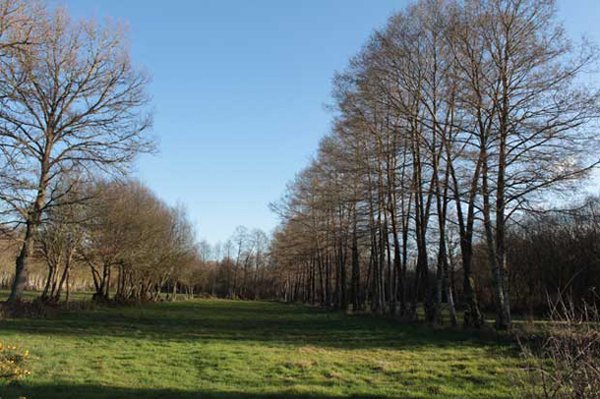
A work of art of monumental value that has been sorely undervalued and disregarded by the ‘Galician sapiens’ of recent decades, who have been compelled to pursue an unsustainable focus on productivity with disastrous side effects for the environment, the health of consumers and the farmers themselves. In Galicia, the system gave rise (due to historical and social factors that allowed widespread access to land ownership) to the famous ‘minifundio’ system, so vilified and condemned by all technocrats as the main cause of the backwardness of the Galician countryside, whilst completely ignoring its positive aspects.
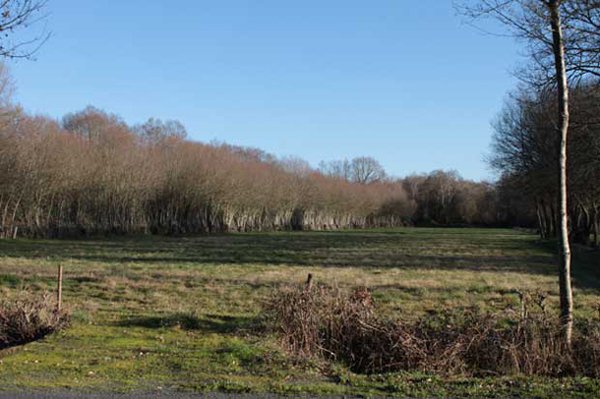
This negative view – the rural exodus, the fires, the land consolidation schemes, monoculture and chemical agriculture –
has threatened with extinction an ecosystem of great biodiversity and outstanding scenic beauty, which, paradoxically, is used as a marketing image by the very people responsible for its destruction.
We have fine examples of these ecosystems throughout the country: Terra Cha, the Marina Lucense, Os Ancares, Ribeira Sacra, etc. But I wanted, by way of example, to briefly describe (mainly because I was born and brought up within it) the ‘traditional agricultural ecosystem’ of the Limia.
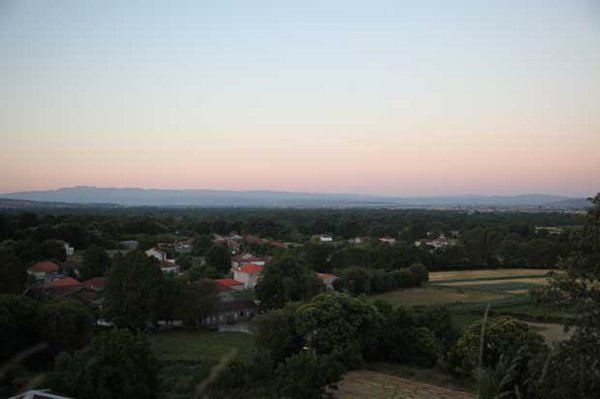
That Limia, once renowned for the quality of its potatoes and the cattle (the ‘vaca limiá’) that grazed on its fertile plains. And, of course, for the abundance of wildlife that thrived in the wetlands scattered across the plain.
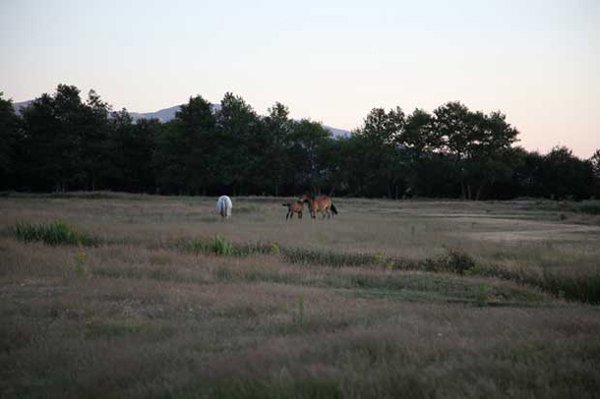
The agricultural system was so harmoniously integrated with nature that it became one with it. The core of this agricultural system was formed by the ‘plazas de labradío’ – open fields where the most fertile land was found, used primarily for growing potatoes and rye. These were vast, largely treeless areas, criss-crossed and bordered by wide paths.
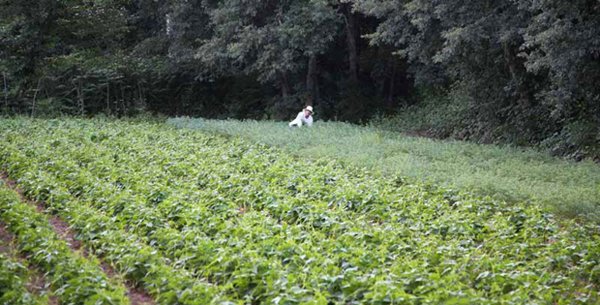
Beyond the cultivated fields, and on much wetter land, we find the meadows, always framed by hedgerows, oaks, birches, alders, ash trees, holm oaks and willows – all of which are remnants of the ancient native forest. These meadows featured a clever irrigation system that filters out the mineral salts and organic matter carried by the water flowing down from the mountains. This natural fertilisation technique fosters the growth of lush grass, which is mown in early summer to produce the hay used to feed the livestock in winter.
On the banks of the River Limia lie the famous Veigas da Limia
, extensive communal pastures that are flooded for much of the year and where all the livestock from the corresponding parishes (Ordes, Sainza and Congostro) grazed together in peaceful coexistence with storks, larks, lapwings, birds of prey, frogs, etc.
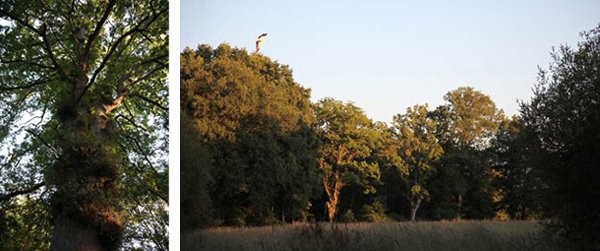
The poorer, drier land, generally higher up in the mountains, was left as oak woodlands. These were used for firewood and for growing gorse, which, once cut and brought into the barns, produced manure – the main fertiliser traditionally used. Finally, close to the villages and right at the foot of the houses, lay the vegetable gardens, communal plots and ‘navás’. These were mainly used for growing maize, potatoes, cabbages, broad beans, courgettes, etc. They were equipped with an efficient irrigation system.
In short, traditional farmers in Limia, like those in the rest of Galicia, knew how to make the most of each type of soil, achieving the best yield with the least effort.
Unfortunately, all these valuable agricultural systems are deteriorating or disappearing altogether due to the abandonment of farming and livestock rearing. But, above all, as has already happened across virtually the entire Limia plain, this is due to the disastrous land consolidation schemes. These projects created a grid-like infrastructure of large plots, forcing farmers into a system of monoculture – a practice with a highly uncertain future that consumes vast quantities of chemicals and pesticides, which pollute the Limia’s greatest asset: its aquifer. A massive disaster and a great deal of public money spent for very little in return, as one of the most important objectives – stemming the rural exodus – was not achieved.
But take note: not all of the Limia region has been subjugated by these ‘concentration camps’; the ecosystem of Rairiz de Veiga is resisting the siege of bureaucrats and bulldozers. It is here that Daiquí seeks to demonstrate that it is not necessary to destroy in order to make progress and create wealth.