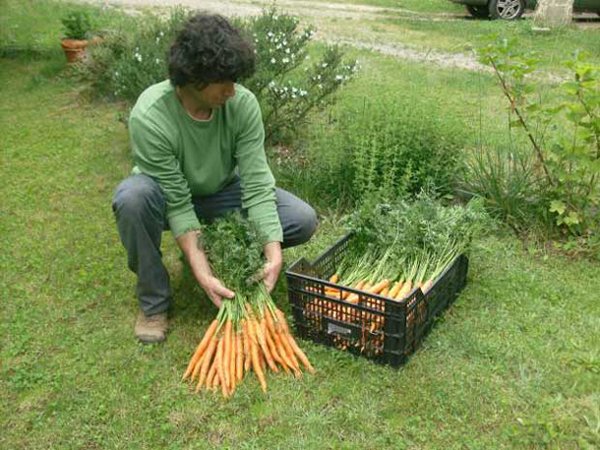
It is a way of farming the land whose
fundamental aim is to produce food without waste and of the highest
quality, whilst respecting the natural environment and preserving the
fertility of the soil for the next generation.
‘The land is not ours; rather, we
have it on loan from our children. It is our duty to improve it or
at least leave it as we found it’ (Sitting Bull)
To achieve these objectives in
organic farming:
NO chemical or
synthetic products are used
- NOR chemical fertilisers
- NOR pesticides (insecticides,
fungicides, herbicides) - NO genetically modified seeds
- NO preservatives
- NO colourings
- NO hormones.
In chemical agriculture,
very potent pesticides are used, which quickly kill all kinds of pests. Unfortunately, however, these substances also kill beneficial organisms
(fungi, bacteria, predatory insects, etc.) which are responsible for
maintaining the biological balance of the soil and the agricultural ecosystem.
As a result, an
imbalance occurs which causes the pests we wish to control to develop resistance,
leading them to reappear with greater virulence, forcing us to increase
the dose or switch to even stronger chemicals.
Agrochemicals are designed
so that a small percentage of individuals always survives, thereby
ensuring the continued business of the companies that sell them for the following year.
However, in organic farming
we must take into account certain principles that respect the laws of
nature:
- Maintaining the balance of the agro-system
by creating living soil, nourishing the earth with what it naturally requires:
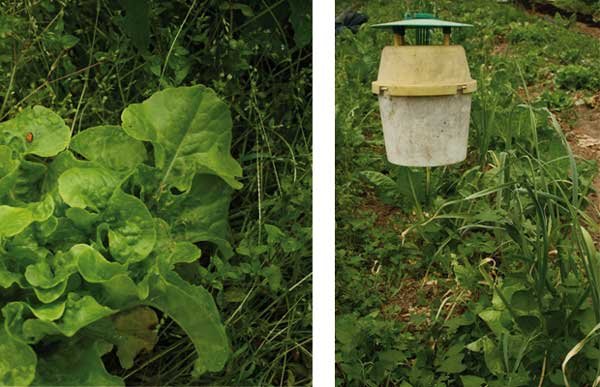
organic matter (compost, manure, green manure, etc.) - Understanding the life cycles of
pests and having the patience to tolerate an acceptable level of damage. - Encouraging the presence of beneficial insects and
micro-organisms (insects, bacteria, mycorrhizae, etc.). - Using seed varieties
that are hardy and well-adapted to the climate and soil type where we grow our crops,
ideally selected by ourselves. - ‘Weeds’ – whether ‘bad’ or ‘good’ – are controlled by mechanical means.
- The seeds or seedlings used
must be organically sourced, preferably our own varieties,
local and native, with a focus on biodiversity.
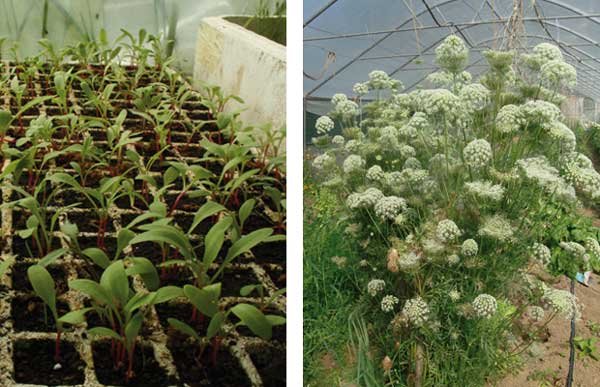
- To prevent pests and diseases,
we will pay close attention to tillage techniques, fertilisation,
crop rotation and intercropping.
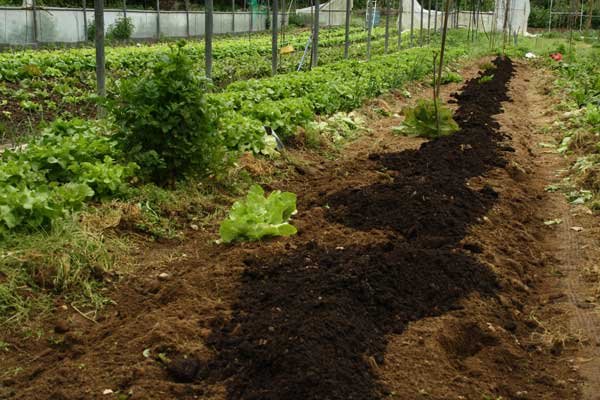
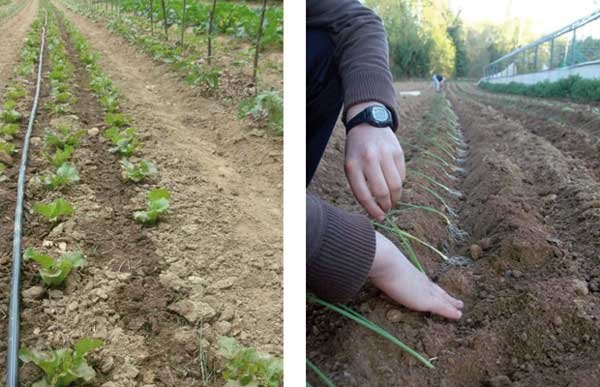
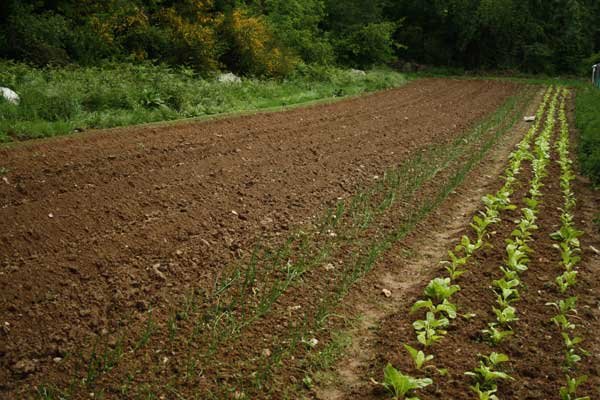
- Crop rotation and intercropping
hinder the uncontrolled spread of pests (garlic with
lettuce, onions with chives, broad beans with maize, etc.)
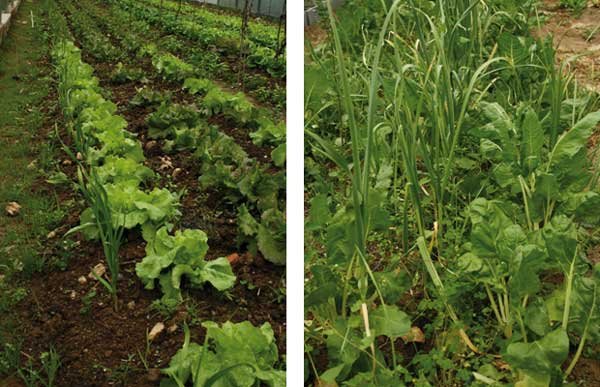
- Soil preparation must be carried out at the
right time and with the appropriate moisture level, taking care not to
disturb the soil layers, and working superficially and gradually. - Close attention must also be paid to the timing of: fertilising, sowing, transplanting and weeding. By carrying out
these tasks at the right time, we will save time and labour and, above
all, we will achieve better harvests.
If, despite following all these
guidelines, we encounter any pest problems, we know there are products that
can help us without leaving toxic residues for us or for the
environment.
Organic farming and livestock rearing
can be a great opportunity and the most effective way to value and
revive the traditional agricultural system of Rairiz de Veiga,
demonstrating that wealth can be created without destroying a unique and marvellous heritage that we must preserve at all
costs.
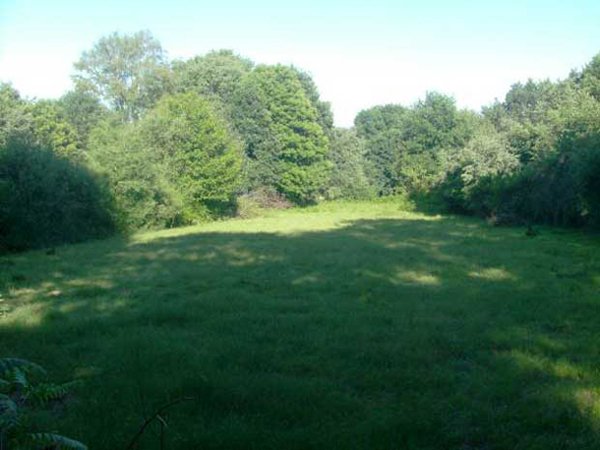
We must revive the best aspects of
our farming culture, but not merely to display them – as is customary – hanging on the walls of an ethnographic museum where everything is lifeless. We prefer a living, interactive and authentic museum where the fusion of
traditional wisdom, combined with the most
modern knowledge and technologies, enables the development of a productive system that is both profitable
for its inhabitants and sustainable.
We also need to change the negative image
that society has of rural work, by dignifying and revaluing
the profession of farming, not only as a guarantee of the country’s
food self-sufficiency, but also as guardians of the landscape, health,
the environment and people.
To achieve this goal, we need to attract and motivate the few young people remaining in the villages, through
training courses that open their eyes to the possibilities and positive aspects of organic farming.
But for this to be possible,
we need many people like you, who value and are aware that they consume food produced by their beloved farmers.